Back
Back
 Articles
What firms still misunderstand about FCA supervision
Posted: 1 January 2026
For many firms, the Financial Conduct Authority is still perceived primarily as a reactive regulator — one that steps in when something goes wrong, when rules are breached, or when enforcement action is required.
That perception is understandable. Many organisations have limited direct interaction with the FCA, particularly outside of authorisation or periodic reviews. Others experience regular turnover in compliance and risk roles, meaning that institutional knowledge from previous supervisory interactions is often lost over time.
But this view misses a fundamental shift in how the FCA operates.
From experience inside the FCA — including at Senior Associate level — one thing is clear: supervision is not primarily about punishment. It is about preventing foreseeable harm, and increasingly, it is proactive rather than reactive..
Supervision is not enforcement
One of the most common misunderstandings is equating supervisory engagement with something having gone wrong.
In reality, supervisory contact often reflects the opposite. It can indicate that the FCA sees a firm as growing quickly, operating in a sensitive market, serving vulnerable or higher-risk consumers, or playing an increasingly important role within a sector.
In these cases, engagement is not a signal of failure, but of attention.
The FCA’s supervisory approach is designed to understand how firms operate in practice — how decisions are made, how risks are identified, and whether governance structures can support the firm’s current and future activities.
This is why firms are increasingly asked how things work, not just whether policies exist.
The rise of proactive supervision
Over recent years, the FCA has moved decisively toward a more proactive supervisory model.
This includes the use of market studies, thematic reviews, targeted questionnaires, and direct engagement with senior management functions (SMFs). These exercises are designed to gather insight across entire sectors — not just to assess individual firms in isolation.
A clear example is the FCA’s work on the treatment of vulnerable consumers in the wealth management sector. As part of its supervisory approach, the FCA engaged directly with firms to understand how they defined vulnerability, what governance arrangements were in place, and how policies translated into real outcomes for clients. The findings were later reflected in supervisory communications, including Dear CEO letters.
Importantly, these exercises were not limited to documentation reviews. They involved interviews, structured questions, and ongoing dialogue with senior leaders — reinforcing the FCA’s expectation that accountability and oversight sit at the top of the organisation.
This pattern is not unique. The FCA routinely monitors areas such as high-growth firms, where rapid expansion can place strain on governance, controls, and operational resilience. In these cases, supervision is often ongoing, with regular touchpoints designed to ensure that growth is supported by appropriate risk management and decision-making structures.
Why this matters more now than ever
This supervisory mindset has become even more pronounced with the introduction of the Consumer Duty.
The Duty represents a shift toward outcomes-based regulation — moving beyond whether firms have policies in place, and toward whether those policies actually deliver good outcomes for consumers. For many firms, this has required a fundamental rethink of how compliance is embedded into operations, governance, and product design.
Policies, procedures, and controls now need to be designed with outcomes in mind. Evidence must demonstrate not just intent, but effectiveness. And firms must be able to show how they monitor, review, and adapt their approach over time.
This is where many organisations struggle — not due to lack of effort, but because their compliance frameworks were built for a different regulatory model.
Continuous alignment, not periodic readiness
Taken together, these developments point to a clear expectation: FCA compliance is not something to prepare for periodically. It is something to demonstrate continuously.
Supervision today looks at how risks are identified and managed as the business evolves, whether governance structures remain effective as firms grow, how regulatory expectations are interpreted and operationalised, and whether firms can evidence compliance at any point in time.Static documentation and annual review cycles are no longer sufficient to meet this standard.
How Raico supports FCA-aligned compliance
Raico is built with this supervisory reality in mind.
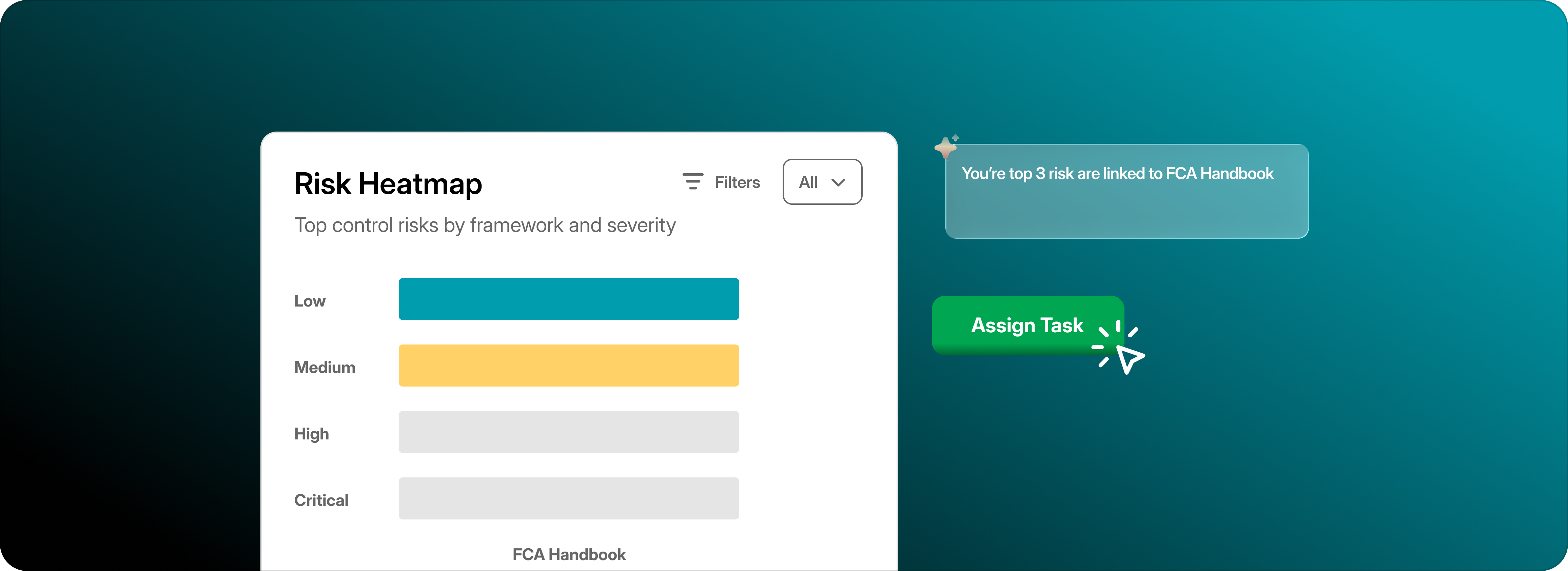
The platform supports firms seeking FCA authorisation, as well as those already authorised, by helping them maintain continuous alignment with the FCA Handbook and evolving supervisory expectations.
Raico enables organisations to understand which FCA rules and expectations apply to their business model, maintain policies, controls, and evidence in a way that reflects ongoing operations, demonstrate accountability, oversight, and governance clearly and consistently, and stay aligned as regulatory expectations evolve over time.
By treating FCA compliance as a living system rather than a one-off exercise, Raico supports firms in building regulatory relationships based on transparency, readiness, and trust.
When the FCA engages with a firm, the goal isn’t to panic or react under pressure — it’s to engage constructively, with confidence and clarity. A healthy relationship with the regulator is in the best interest of everyone involved, including the business and its customers. Raico supports this by helping organisations demonstrate, at any point in time, how compliance is embedded into their operations and governance — not just documented, but actively working in practice.