Back
Back
 Articles
Why NIS2 is really about governance, not cyber
Posted:15 January 2026
For many organisations, NIS2 is still being approached as a cybersecurity directive — a technical upgrade, an IT-led compliance project, or a checklist of controls to be implemented before a deadline.
That interpretation is understandable. NIS2 builds on cybersecurity foundations, expands technical requirements, and introduces stricter obligations around incident reporting and risk management.
But it misses the point.
At its core, NIS2 is not about technology.
It is about governance, accountability, and how cyber risk is managed at leadership level.
From technical risk to executive responsibility
One of the most significant changes introduced by NIS2 is the explicit shift of responsibility away from purely technical teams and toward senior management.
- Approve cybersecurity risk management measures
- Oversee their implementation
- Be accountable for failures to manage cyber risk appropriately
Under NIS2, cyber risk is no longer something that can sit solely within IT or security functions. Management bodies are expected to:
This represents a structural change in how cyber risk is treated. It becomes part of enterprise risk management, subject to the same expectations of oversight, documentation, and accountability as financial, operational, or regulatory risk.
For many organisations, this is where the challenge begins.
Why existing compliance models break under NIS2
Most organisations are still operating with compliance models designed for point-in-time assessments.
Cybersecurity controls are reviewed periodically. Policies are updated annually. Evidence is gathered when required. Responsibility is distributed across teams, with limited visibility at leadership level.
NIS2 disrupts this model.
The directive expects organisations to understand cyber risk continuously — across systems, suppliers, and services — and to be able to demonstrate that understanding at any point in time.
Static documentation and siloed ownership struggle to meet this standard, particularly in complex organisations operating across jurisdictions, sectors, or supply chains.
NIS2 and the rise of continuous governance
NIS2 signals a broader regulatory shift: cyber resilience is no longer defined by how organisations respond to incidents alone, but by how they govern risk before incidents occur.
- Ongoing identification and assessment of cyber risk
- Clear ownership and accountability at management level
- Continuous monitoring of controls and dependencies
- Evidence that governance arrangements remain effective as the organisation evolves
This includes:
In other words, NIS2 moves cyber risk into the same category as other critical business risks — requiring structured, repeatable, and auditable governance.
This is not simply a compliance exercise. It is an operating model change.
Why NIS2 cannot be treated in isolation
Another common challenge is treating NIS2 as a standalone obligation.
In reality, NIS2 overlaps significantly with other regulatory and governance frameworks, including operational resilience requirements, sector-specific regulations, and broader risk management standards.
Approaching NIS2 in isolation leads to duplicated work, inconsistent controls, and fragmented evidence — precisely the issues regulators are increasingly pushing organisations to address.
The organisations that succeed under NIS2 will be those that recognise it as part of a wider governance landscape, rather than a one-off directive to be implemented and set aside.
What effective NIS2 governance looks like
Effective NIS2 alignment is not defined by a single project or remediation plan. It is characterised by systems that support continuous oversight.
- Clear mapping of NIS2 requirements to existing controls and governance structures
- Ongoing visibility into cyber risk across the organisation
- Evidence that leadership is engaged and accountable
- The ability to demonstrate compliance without last-minute coordination
In practice, this means:
This level of readiness cannot be achieved through documents alone. It requires tooling that connects requirements, controls, risk, and evidence into a single operational view.
How Raico supports NIS2-aligned governance
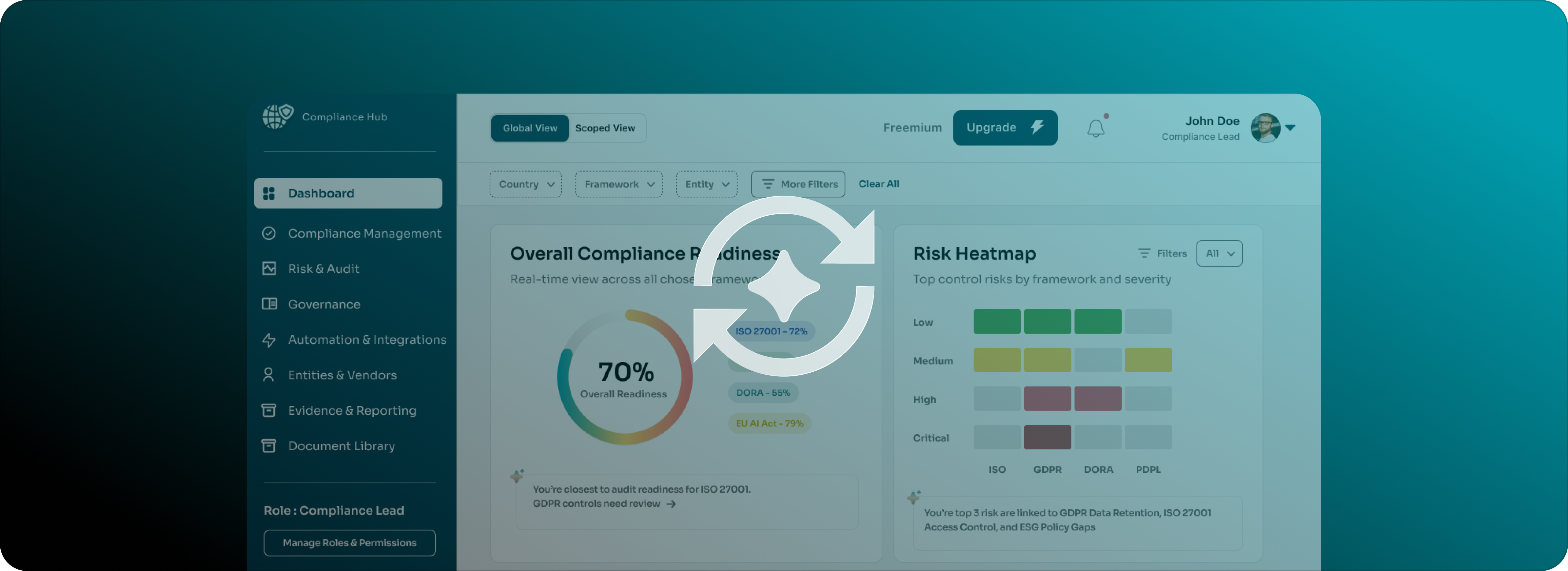
Raico is built to support this shift from static compliance to continuous governance.
- Identifying applicable NIS2 obligations based on sector and jurisdiction
- Mapping requirements to existing controls and overlapping frameworks
- Supporting leadership-level oversight through clear accountability and traceability
- Maintaining audit-ready evidence as governance and risk environments evolve
The platform helps organisations align with NIS2 by:
By treating NIS2 as part of a broader, interconnected governance system, Raico helps organisations avoid duplication while strengthening their overall cyber and regulatory posture.
NIS2 as a signal of what comes next
NIS2 is not an outlier. It reflects a wider regulatory direction — one where cyber risk is inseparable from governance, and where compliance must be demonstrable continuously, not episodically.
Organisations that approach NIS2 as a technical obligation may meet minimum requirements. Those that treat it as a governance framework will be better positioned for what comes next — both from regulators and from the markets they operate in.
NIS2 is not just raising the bar for cybersecurity. It is redefining how organisations are expected to govern risk.